Smartphone
1.1 Quick Answer
A smartphone is a handheld touchscreen computing device combining mobile phone, internet browser, camera, and app platform in a single pocket-sized unit. Running iOS or Android operating systems, smartphones have been the dominant personal computing device globally since the early 2010s. The iPhone, introduced by Apple in 2007, established the modern smartphone template and remains the most commercially significant consumer electronics product in history.
1.2 Visual Identification Guide
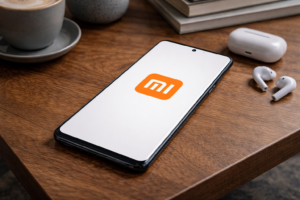
A modern smartphone is a rectangular slab of glass and aluminium or polycarbonate measuring 5.5 to 6.9 inches diagonally across the front face, 2.5 to 3.2 inches wide, and 0.25 to 0.35 inches thick. Weight ranges from 140 to 240 grams. The front face is dominated by a touchscreen display with minimal bezels on premium models. A front-facing camera appears as a small circular cutout or notch at the top of the display.
The rear face carries one to five camera lenses arranged in a rectangular module, typically positioned in the upper left corner. A LED flash sits adjacent to the camera cluster. The rear surface is glass on premium models — enabling wireless charging — or polycarbonate on mid-range and budget devices. The primary brand logo and model identifier appear on the rear face.
Physical controls are minimal — a power button on the right edge, volume buttons on the left edge, and a SIM card tray on the left or bottom edge. A USB-C or Lightning port on the bottom edge provides charging and data transfer. A speaker grille appears on the bottom edge. The headphone jack, standard until the mid-2010s, has been removed from most premium smartphones since Apple eliminated it from the iPhone 7 in 2016.
Key brand identifiers: Apple iPhones use a bitten apple logo on the rear and Lightning or USB-C ports. Samsung Galaxy devices use the Samsung wordmark. Google Pixel devices use a distinctive horizontal camera bar across the rear. Manufacturer, model series, and storage capacity are printed in small text on the rear or inside the SIM tray.
1.3 What Does It Do?
A smartphone makes and receives voice calls and text messages, connects to the internet via mobile data and Wi-Fi, captures photos and video, navigates using GPS, runs third-party applications for virtually any purpose, and manages calendars, email, banking, payments, and entertainment. It has replaced the wristwatch, camera, map, calculator, alarm clock, music player, and handheld games console for most users. Over 6.8 billion smartphones are in active use globally as of the mid-2020s — more than one for every person on Earth.
1.4 How It Works
- A system-on-chip — combining processor, GPU, and modem in a single integrated circuit — handles all computing tasks. Apple’s A-series and Qualcomm Snapdragon are the dominant chip families.
- The touchscreen uses capacitive sensing — a grid of transparent electrodes detects the electrical properties of a finger touching the glass surface and translates the position into on-screen input.
- Cellular connectivity uses radio transmitters and receivers operating across multiple frequency bands to communicate with carrier network towers for calls and mobile data.
- Wi-Fi and Bluetooth radios provide short-range wireless connectivity to local networks and accessories.
- The battery — a lithium-ion or lithium-polymer cell — stores charge and powers the device, typically providing 10 to 30 hours of use per full charge depending on usage intensity.
- The operating system — iOS or Android — manages hardware resources, runs applications, and provides the user interface layer through which all functions are accessed.
1.5 History & Evolution
The term smartphone was first used commercially by Ericsson in 1997 for the GS88 device. IBM’s Simon Personal Communicator, released in 1994, is generally considered the first true smartphone — a touchscreen device combining phone, fax, email, and PDA functions. Nokia dominated early smartphone development through the early 2000s with its Symbian-based devices, peaking at over 40% global market share in 2007.
Apple’s iPhone, announced by Steve Jobs on January 9, 2007 and released on June 29, 2007, redefined the category. Its multi-touch interface, full web browser, and App Store — launched in 2008 — established the modern smartphone paradigm. Google’s Android operating system, released in 2008, provided an open alternative adopted by Samsung, HTC, Motorola, and ultimately every major manufacturer outside Apple.
Samsung overtook Nokia as the world’s largest mobile phone manufacturer in 2012 and has traded the top position with Apple annually since. The smartphone market matured rapidly — by 2015 smartphones had displaced feature phones as the global standard. iPhone revenue alone exceeded $200 billion annually by the early 2020s, making it the most commercially successful consumer product line in history.
Foldable smartphones — devices with flexible displays that fold to a compact form — entered the market from 2019 with Samsung’s Galaxy Fold and have grown into a premium niche. AI-integrated features including on-device language models, computational photography, and real-time translation became standard across the premium tier through the early 2020s.
1.6 Where You'll Usually Find One
- Mobile carrier retail stores for new contract and outright purchase
- Apple Stores and authorised resellers for iPhone
- Electronics retailers including Best Buy, JB Hi-Fi, and Currys
- Online via manufacturer websites, Amazon, and carrier portals
- Secondhand via eBay, Facebook Marketplace, Swappa, and Back Market for refurbished examples
1.7 Common Misidentifications
Feature phone: A mobile phone without a touchscreen operating system or app platform. Distinguished by its physical keypad, smaller display, and inability to run third-party applications. Feature phones remain in production for basic call and text use but share no meaningful design language with modern smartphones.
iPod Touch: Apple’s Wi-Fi-only iOS device without cellular capability. Identical in appearance to an iPhone of equivalent generation but lacks a SIM card tray and cellular antenna. Discontinued by Apple in 2022.
Tablet: A larger touchscreen computing device typically 7 to 13 inches diagonally. Shares operating system and app ecosystem with smartphones but is distinguished by its size, inability to make standard calls on most models, and primary use as a media consumption and productivity device.
1.8 Is It Valuable?
Smartphones depreciate rapidly. Current flagship models hold the most value; older models drop steeply within two to three years of release.
- Current flagship iPhone (latest model) new: $999—$1,599
- Current flagship Samsung Galaxy S or Ultra new: $999—$1,399
- Two-year-old flagship in excellent condition: 40—60% of original retail
- Four-year-old flagship in good condition: 15—30% of original retail
- Original iPhone (2007) in working condition: $500—$2,000+ as collectible
- Sealed original iPhone box unopened: $5,000—$50,000+ at specialist auction
Condition, storage capacity, and original accessories drive secondhand value. iPhones hold value better than Android devices in most markets due to longer software support cycles — Apple supports iPhones for approximately six years after release.
1.9 Modern Alternatives
No device has emerged to displace the smartphone as the primary personal computing and communication tool. Smartwatches and earbuds extend smartphone functionality to the wrist and ear but depend on a smartphone as their primary hub. Foldable phones represent an evolutionary rather than replacement trajectory. AI-native hardware devices — exemplified by the Humane AI Pin and Rabbit R1 — attempted to replace the smartphone interface in 2024 but found no meaningful consumer traction. The smartphone platform appears entrenched for the foreseeable future.
Looking for one? Where to buy a Smartphone →
1.10 Final Identification Checklist
- Rectangular glass and metal slab 5.5 to 6.9 inches diagonally
- Full-face touchscreen display with minimal bezels
- Rear camera module — one to five lenses with LED flash
- Power button on right edge, volume buttons on left edge
- USB-C or Lightning port on bottom edge
- SIM card tray on left or bottom edge
- Brand logo on rear face — Apple, Samsung, Google, or other manufacturer
- iOS or Android operating system on startup