Protein Bar
1.1 Quick Answer
A protein bar is a packaged food product formulated to deliver a high concentration of protein — typically 15 to 30 grams per bar — in a convenient single-serve format. Made from whey, casein, soy, pea, or egg protein combined with carbohydrates, fats, flavourings, and binders, protein bars are consumed as post-workout recovery food, meal replacements, and high-protein snacks. The global protein bar market exceeded $6 billion annually by the early 2020s and continues to grow across sports, fitness, and general health consumer segments.
1.2 Visual Identification Guide
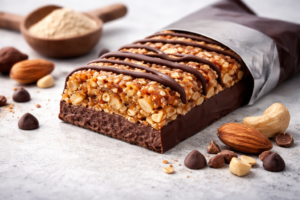
A protein bar is a rectangular or cylindrical food product typically 2 to 4 inches long, 1 to 1.5 inches wide, and 0.75 to 1.5 inches thick. Weight per bar ranges from 45 grams on compact high-protein formats to 100 grams on larger meal replacement bars. The bar is individually wrapped in a foil, plastic, or paper-foil laminate wrapper printed with brand identity, flavour name, and prominent macronutrient callouts — protein grams per bar being the most prominent figure on the front of pack.
Bar texture varies significantly by formulation. Chewy bars have a soft, dense, slightly sticky interior similar to a flapjack or nougat. Crispy bars use puffed grain or rice crisp inclusions for a lighter, crunchy texture. Coated bars are enrobed in a chocolate, yoghurt, or flavoured coating over a softer interior. Layered bars combine multiple texture zones — a base layer, filling, and coating — mimicking confectionery bar formats.
The wrapper design is typically bold and functional — sports-oriented brands use high contrast colours, bold typography, and active imagery. Health-oriented brands use cleaner, more minimal design language. The nutrition information panel on the rear lists protein source, total protein, carbohydrate, fat, sugar, fibre, and calorie content per bar and per 100 grams. Ingredient lists on protein bars are typically long, reflecting the number of functional ingredients, sweeteners, and processing agents required to achieve the desired texture and macronutrient profile.
Recommended Products


Prices and availability are accurate as of the indicated date/time and are subject to change.
Any price and availability information displayed on Amazon at the time of purchase will apply.
1.3 What Does It Do?
A protein bar delivers a measured dose of protein and calories in a portable, shelf-stable, and palatable format. Post-exercise consumption provides amino acids for muscle protein synthesis — the process by which the body repairs and builds muscle tissue after training. As a meal replacement or snack it provides satiety through protein’s appetite-suppressing effect, making it useful for weight management and controlled calorie intake.
For athletes and regular gym users a protein bar bridges the gap between training sessions and full meals — particularly useful when a cooked meal is inconvenient immediately after exercise. For general consumers it serves as a higher-protein alternative to standard confectionery or snack bars.
1.4 How It Works
- Protein from the bar is digested in the stomach and small intestine, breaking down into individual amino acids and peptides.
- These amino acids are absorbed into the bloodstream and transported to muscle tissue and other cells requiring protein for repair and synthesis.
- Whey protein — the most common protein source in sports bars — is rapidly digested, delivering amino acids to muscle tissue within 30 to 60 minutes of consumption, making it well-suited to post-workout use.
- Casein protein digests more slowly, providing a sustained amino acid release over several hours — used in bars marketed for overnight recovery or sustained satiety.
- Carbohydrates in the bar replenish glycogen stores depleted during exercise, supporting recovery and providing energy for subsequent training sessions.
Core nutritional principle: protein muscle protein synthesis — dietary protein provides the amino acid building blocks the body cannot produce itself, triggering the repair and growth of muscle fibres damaged during resistance exercise.
1.5 History & Evolution
High-protein food bars have their origins in military field rations and space programme nutrition research. The US military developed compact, calorie-dense ration bars from the World War II era onward. NASA’s early space food research in the 1960s drove development of compact, nutrient-complete food formats designed for consumption in zero gravity — these included early bar formats that influenced subsequent sports nutrition product development.
The first commercial protein bars targeted at athletes appeared in the United States in the 1980s alongside the growth of bodybuilding culture and commercial gyms. PowerBar, founded by Brian Maxwell in Berkeley, California in 1986, is widely credited as the first mainstream sports energy and nutrition bar. Originally formulated for endurance athletes, PowerBar’s success demonstrated that there was a mass market for functional food products positioned around athletic performance.
The category expanded significantly through the 1990s as whey protein — a byproduct of cheese manufacture previously discarded or used as animal feed — became recognised as an exceptionally bioavailable protein source for muscle recovery. Met-Rx, developed in 1991 by Scott Connelly and Bill Phillips, introduced the meal replacement bar concept to the mainstream market. Balance Bar, launched in 1992, popularised the 40-30-30 macronutrient ratio as a mass market positioning.
The 2000s and 2010s saw the category mature and fragment dramatically. Quest Nutrition, founded in 2010, disrupted the market with high-fibre, low-sugar bars that addressed consumer concerns about the high sugar content of most existing products. Quest reached $1 billion in annual revenue within five years. The rise of plant-based nutrition from the mid-2010s drove a new wave of pea protein, brown rice protein, and blended plant protein bars. By the early 2020s the protein bar aisle in most supermarkets offered dozens of competing brands across every flavour, texture, and dietary positioning imaginable.
1.6 Where You'll Usually Find One
- Supermarkets and convenience stores — protein bars now occupy mainstream snack aisles
- Gyms, health clubs, and fitness centres — vending machines and reception retail
- Health food stores and supplement retailers for specialist and premium brands
- Petrol stations and airport retail for impulse purchase formats
- Online via brand direct and Amazon for bulk purchase and subscription
1.7 Common Misidentifications
Cereal or granola bar: A grain-based snack bar with minimal protein content — typically 2 to 5 grams per bar. Distinguished from a protein bar by its lower protein content, higher sugar content, and lighter, crunchier texture. Brands including Nature Valley, Quaker, and Kellogg’s produce cereal bars that are not interchangeable with protein bars for post-workout nutrition purposes.
Energy bar: A carbohydrate-focused bar designed to provide quick-release energy for endurance athletes during exercise rather than protein for post-exercise recovery. Higher in simple carbohydrates and lower in protein than a protein bar. PowerBar and Clif Bar straddle both categories depending on the specific product variant.
Meal replacement bar: A subcategory of protein bar formulated to replace a full meal with a complete macronutrient and micronutrient profile. Distinguished by their higher calorie content — typically 300 to 400 calories — and added vitamin and mineral fortification. The distinction between a protein bar and a meal replacement bar is marketing positioning as much as formulation difference.
1.8 Is It Valuable?
Protein bars are consumed products with no secondhand or collector value. Market value is entirely at the retail level.
- Budget supermarket own-brand protein bars: $1.50—$2.50 per bar
- Mid-range branded bars (Quest, Grenade, Fulfil): $2.50—$4.00 per bar
- Premium or specialist bars: $4.00—$6.00 per bar
- Bulk box of 12 bars direct from brand: $25—$45 — significant per-unit saving over single retail
- Subscription and auto-delivery discounts: typically 10—20% below single box retail
Value assessment for protein bars is nutritional rather than monetary — cost per gram of protein is the standard comparison metric used by informed consumers. A bar delivering 20 grams of protein for $2.00 costs $0.10 per gram of protein. The same metric applied across bars, protein powder, and whole food sources allows direct comparison of protein delivery cost across formats.
1.9 Modern Alternatives
Protein shakes and powders deliver protein more cheaply per gram than bars but require preparation and are less portable. Whole food protein sources — chicken, eggs, Greek yoghurt, cottage cheese — are nutritionally superior and cheaper but less convenient. High-protein snack products including protein crisps, protein cookies, and protein cereals have expanded the functional food category beyond the bar format. None have displaced the protein bar as the dominant portable post-workout and high-protein snack format. The category continues to grow with no sign of saturation.
Looking for one? Where to buy Protein Bars →
1.10 Final Identification Checklist
- Rectangular or cylindrical individually wrapped food bar 45 to 100 grams
- Prominent protein gram count on front of wrapper — typically 15 to 30g
- Foil, plastic, or laminate wrapper with bold brand and flavour identity
- Chewy, crispy, coated, or layered texture depending on formulation
- Long ingredient list including protein source, sweeteners, and processing agents
- Nutrition panel listing protein, carbohydrate, fat, sugar, fibre, and calories
- Protein source identified: whey, casein, soy, pea, egg, or blend
- Shelf stable at room temperature — no refrigeration required before opening