Flashlight
1.1 Quick Answer
A flashlight is a portable, battery-powered handheld light source. It produces a focused beam of light through a bulb or LED mounted behind a reflective housing. Available in sizes from keychain-scale to full-size tactical models, flashlights have been a standard household, trade, and emergency tool since the early 20th century and remain in active production and widespread use today.
1.2 Visual Identification Guide

Image: Fenix_P1D_LED_flashlight.jpg, Wikimedia Commons, CC BY 2.0
.jpg)
A flashlight is a cylindrical or rectangular handheld device ranging from 3 inches on compact EDC models to 14 inches on full-size heavy-duty versions. Diameter varies from 0.5 inches on pen-light models to 2.5 inches on large battery flashlights. Weight ranges from under 30 grams on small aluminium models to over 500 grams on multi-cell incandescent versions.
The head — the wider front end — houses the light source, reflector, and lens. The reflector is a parabolic or smooth mirror-finish bowl that directs light forward into a focused beam. The lens covering the head is glass or polycarbonate, flat or slightly convex. On adjustable focus models a rotating or sliding head moves the bulb relative to the reflector to switch between spot and flood beam profiles.
The body is the main cylindrical tube housing the battery compartment. Common materials include aluminium alloy — anodized black, grey, or silver — hard plastic, and rubber-coated or rubberised grip variants for tactical and outdoor use. Knurling — a cross-hatched texture — is machined into aluminium bodies for grip. A switch is positioned on the tail cap, body, or head depending on model.
The tail cap threads off to reveal the battery compartment. AA, AAA, C, D, and proprietary lithium cell formats are the most common power sources. Modern high-output flashlights frequently use 18650 lithium-ion rechargeable cells. Brand markings appear on the body — Maglite, Fenix, SureFire, Streamlight, and Olight are among the most recognised manufacturers.
Recommended Products

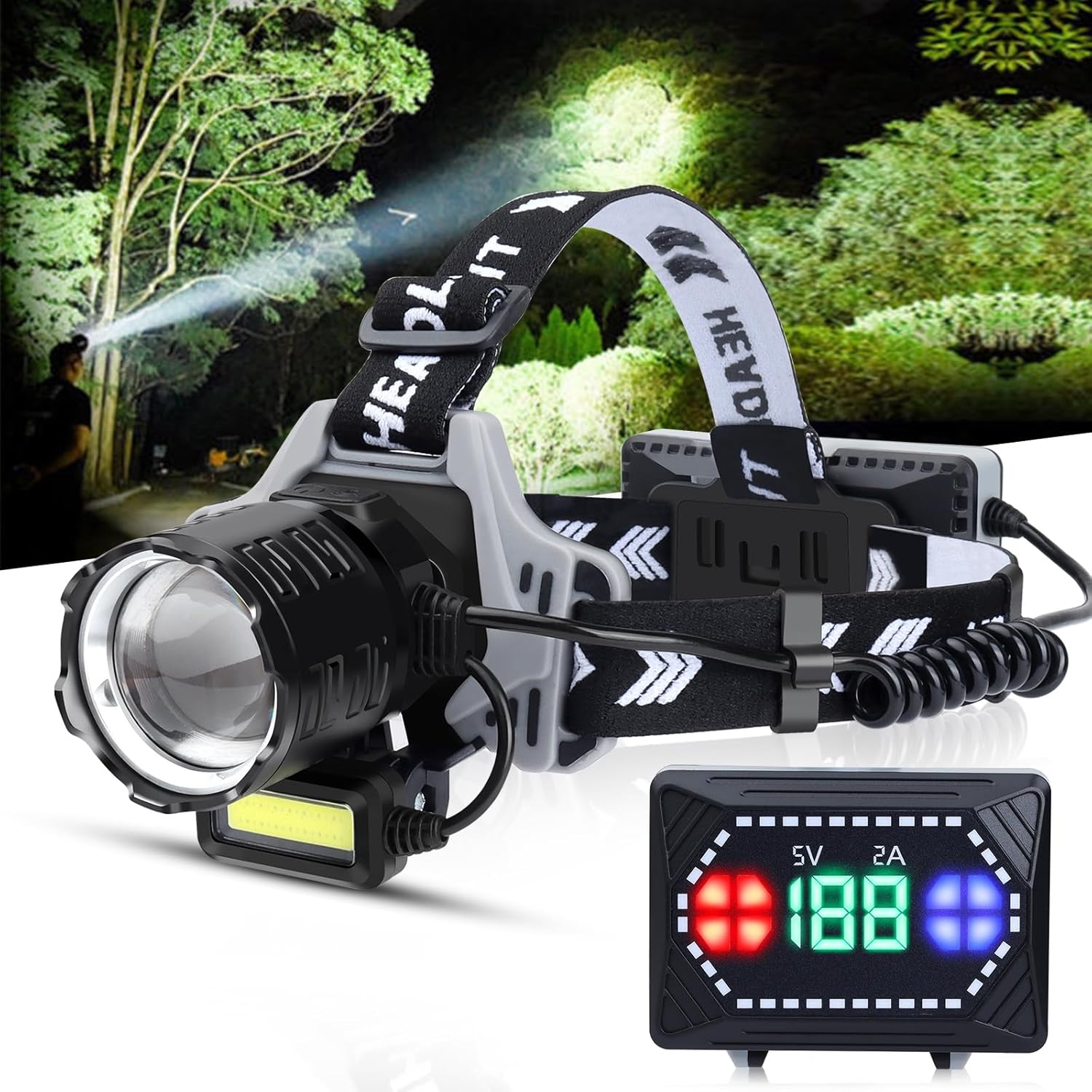


Prices and availability are accurate as of the indicated date/time and are subject to change.
Any price and availability information displayed on Amazon at the time of purchase will apply.
1.3 What Does It Do?
A flashlight illuminates a targeted area in low or zero-light conditions. The focused beam concentrates light output in a specific direction, extending useful range beyond what an omnidirectional light source of the same power could achieve. Applications include household use during power outages, trade and maintenance work in confined or dark spaces, outdoor and camping use, emergency signalling, law enforcement, and military operations.
Modern multi-mode flashlights offer variable output levels — high, medium, low, and strobe — accessible through a single switch. Strobe mode is used for signalling and as a disorientation tool in tactical applications.
1.4 How It Works
- Batteries installed in the body provide electrical current when the circuit is completed by pressing the switch.
- Current flows through the circuit to the light source — an incandescent bulb filament or LED emitter mounted at the focal point of the reflector.
- The light source emits light in all directions. The parabolic reflector captures the rearward and sideward light and redirects it forward in a focused beam.
- The lens protects the reflector and light source from impact and moisture while allowing maximum light transmission.
- On LED models, a driver circuit regulates current to the LED, maintaining consistent output and enabling multiple brightness modes.
Core mechanical principle: parabolic reflection — the same optical geometry used in car headlights, stage spotlights, and radio telescopes, miniaturised into a handheld battery-powered format.
1.5 History & Evolution
The first portable electric torch was developed in the late 1890s following the commercial availability of dry cell batteries and miniature incandescent bulbs. English inventor David Misell filed the first flashlight patent in 1899, assigned to the American Electrical Novelty and Manufacturing Company — later renamed the American Ever Ready Company, which became Eveready.
Early flashlights were called torches in British English — a name that persists in most English-speaking countries outside North America. They were marketed as novelties initially, as the carbon filament bulbs of the era were fragile and battery life was extremely limited. The term flashlight referenced the need to flash the light on briefly rather than sustain continuous use, which would exhaust early batteries in minutes.
Tungsten filament bulbs introduced after 1904 significantly improved efficiency and durability. Through the mid-20th century the D-cell incandescent flashlight became the household standard across North America and Europe. Maglite, founded in 1979, elevated the flashlight into a precision-machined aluminium tool and established the category as a serious piece of equipment rather than a novelty item.
LED technology transformed the flashlight from the early 2000s onward. LEDs deliver dramatically greater efficiency — measured in lumens per watt — longer service life, and greater durability than incandescent bulbs. Output that required a large multi-cell incandescent torch in 2000 is now available from a single-AA pocket flashlight. Modern high-output EDC flashlights deliver 1,000 lumens or more from a device smaller than a marker pen.
1.6 Where You'll Usually Find One
- Hardware stores and home improvement retailers for general and trade models
- Outdoor and camping retailers for high-output and specialist models
- Thrift stores and garage sales — flashlights are among the most commonly found household items
- Estate sales and junk drawers in virtually every household
- Online via specialist retailers for premium EDC and tactical models
- Military surplus stores for older incandescent military-issue examples
1.7 Common Misidentifications
Torch: Not a misidentification — torch is the correct term for a flashlight in British, Australian, and most non-American English. The same object, different regional name.
Headlamp: A hands-free light source worn on the forehead via an elastic band. Shares LED and battery technology with a flashlight but is designed for mounting on the head rather than handheld use. Distinguished by its mounting bracket and elastic headband rather than a grip body.
UV torch: A flashlight-form device emitting ultraviolet light rather than visible white light. Used for detecting stains, authenticating documents, and checking for scorpions. Identified by its purple or near-invisible beam and UV LED emitter visible as a violet-tinted lens.
1.8 Is It Valuable?
Common household flashlights carry minimal resale value — $1 to $10 at thrift stores. Value concentrates in premium brands, vintage examples, and specialist models.
- Vintage Maglite 2-6 cell aluminium models in excellent condition: $15—$50
- Early SureFire incandescent tactical models: $40—$120
- Current production premium EDC flashlights (Fenix, Olight, Emisar): $40—$150 new, retaining value used
- Military-issue flashlights with original markings: $20—$80 among militaria collectors
- Rare or limited production models from enthusiast makers: $100—$400+
Working condition is the primary value factor. Corroded battery contacts — the most common defect — can often be cleaned but reduce value on otherwise excellent examples. The flashlight enthusiast and EDC collector community maintains active secondary markets for premium models on forums and dedicated resale platforms.
1.9 Modern Alternatives
Smartphone flashlight functions have replaced dedicated flashlights for casual household use among most consumers. For sustained, high-output, or specialist use the dedicated flashlight remains superior — smartphones cannot match the beam distance, waterproofing, impact resistance, or battery life of a quality LED flashlight. The EDC flashlight market has grown steadily through the 2010s and 2020s as LED technology has made high-performance pocket lights increasingly accessible and affordable.
Looking for one? Where to buy a Flashlight →
1.10 Final Identification Checklist
- Cylindrical or rectangular handheld body 3 to 14 inches long
- Wider head housing light source, reflector, and lens
- Parabolic reflector visible inside the head behind the lens
- Switch on tail cap, body, or head
- Battery compartment accessed via threaded tail cap or side panel
- Aluminium alloy, hard plastic, or rubberised body construction
- Knurled grip texture on aluminium models
- Brand name on body — Maglite, Fenix, SureFire, Streamlight, or Olight
- LED emitter or incandescent bulb visible at centre of reflector