Pizza Saver
1.1 Quick Answer
A pizza saver is a small three-legged plastic device placed in the centre of a boxed pizza to prevent the lid from sagging onto the surface of the pizza during delivery. Typically 4 to 5 centimetres tall, it is one of the most widely recognised single-purpose objects in food packaging and has been in use since its invention and patenting by Carmela Vitale of New York in 1985.
1.2 Visual Identification Guide

Image: Pizza_saver.JPG, Wikimedia Commons, Public Domain

A pizza saver is a miniature tripod — three short legs extending from a central hub — standing 4 to 5 centimetres tall and approximately 4 to 6 centimetres in diameter across the leg span. The top surface is flat, forming a small platform that contacts the underside of the pizza box lid. The three legs are angled outward from the hub and terminate in small feet that rest on the pizza surface without cutting into the topping.
Construction is injection-moulded polystyrene or polypropylene plastic in white, though occasional coloured variants exist. Weight is negligible — under 2 grams. The object is entirely smooth with no moving parts, markings, or mechanism of any kind. It is a single-piece moulding with no assembly required.
The geometry is immediately recognisable — no other common object shares the three-legged miniature table form at this scale. The flat top platform and wide stable tripod base are its defining visual characteristics.
Recommended Products

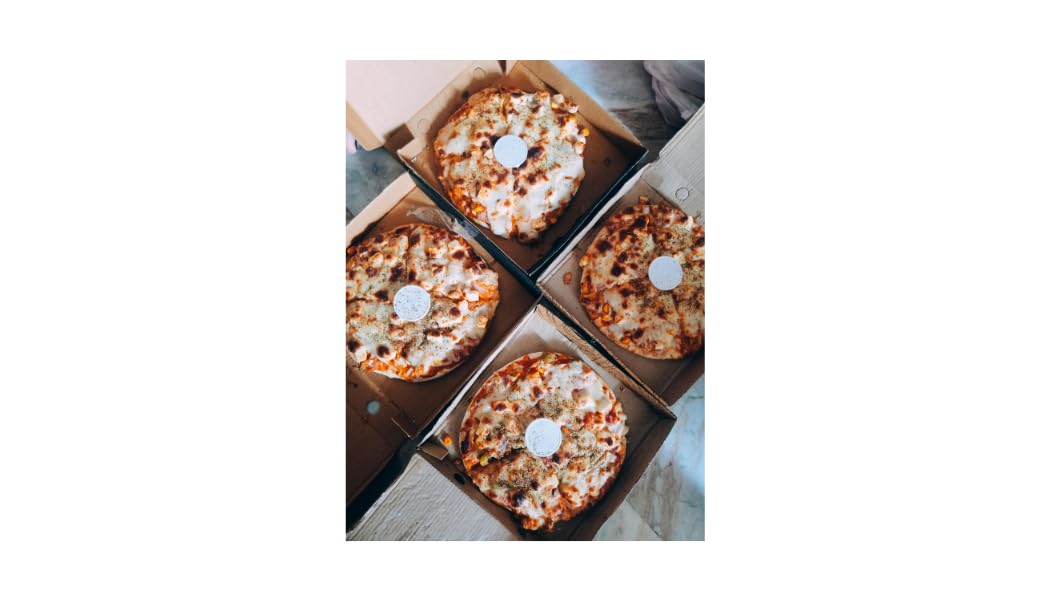
Prices and availability are accurate as of the indicated date/time and are subject to change.
Any price and availability information displayed on Amazon at the time of purchase will apply.
1.3 What Does It Do?
A pizza saver supports the centre of a pizza delivery box lid, preventing it from deflecting downward under its own weight or under stacking pressure and making contact with the pizza’s cheese and toppings. Without it, the box lid can press into soft toppings, dragging cheese and disturbing the pizza surface during transit. The pizza saver transfers the load of the lid to the pizza base — which is firm enough to bear it — rather than to the toppings.
Despite its single intended function, the pizza saver has accumulated a significant cultural identity as a mystery object — it is among the most commonly submitted items to object identification communities online, typically by people who have never seen one outside a pizza box context.
1.4 How It Works
- The pizza saver is placed upright in the centre of the pizza immediately before the box is closed.
- The three legs rest on the pizza base — typically on a firm crust area — distributing their contact points away from soft topping areas.
- The flat top platform contacts the inner surface of the closed box lid, holding it at a fixed height above the pizza surface.
- Under stacking pressure — when multiple boxes are placed on top of each other during delivery — the pizza saver transfers the compressive load through its legs to the pizza base, preventing the lid from deflecting into the toppings.
Core mechanical principle: load transfer through a rigid spacer — the same principle used in structural columns, furniture legs, and any compression-bearing support element.
1.5 History & Evolution
Carmela Vitale of Dix Hills, New York filed a patent for the pizza saver on February 10, 1983. The patent — US Patent 4,498,586 — was granted on February 12, 1985 under the title Package Saver. Vitale’s patent described the device as applicable to any packaged food item requiring lid support, though its application to pizza delivery became its defining use.
The pizza delivery industry expanded rapidly through the 1980s and 1990s alongside the growth of major chains including Domino’s, Pizza Hut, and Papa John’s. The pizza saver became a standard component of pizza packaging globally, produced in vast quantities as a disposable single-use item included automatically with every boxed delivery pizza.
Vitale’s patent expired after 17 years, opening production to any manufacturer. The design has remained essentially unchanged since 1985 — the problem it solves has not changed and the tripod geometry solves it optimally. No meaningful design evolution has occurred in four decades of production.
The pizza saver achieved unexpected cultural prominence through social media in the 2010s as a viral mystery object — regularly posted to Reddit’s r/whatisthisthing and similar identification communities by people who had encountered one outside its pizza box context and could not identify it. This pattern of decontextualised discovery made it one of the most recognised entries in the viral object identification genre.
1.6 Where You'll Usually Find One
- Inside any delivered boxed pizza — the most common discovery context
- Kitchen drawers and miscellaneous household junk collections
- Food packaging supply wholesalers in bulk quantities
- Online via Amazon and restaurant supply retailers for bulk purchase
- Occasionally repurposed as a miniature table for action figures or doll furniture
1.7 Common Misidentifications
Miniature table or furniture piece: The most common misidentification — the tripod form with flat top is immediately suggestive of a table. It is not furniture and has no domestic use beyond its pizza packaging function, though its table-like appearance has made it a popular prop in miniature photography and toy contexts.
Cake decoration stand: Small plastic supports used in tiered cake construction share a broadly similar tripod form but are larger, sturdier, and designed to bear significant weight. Distinguished by their larger size and more robust construction.
TV aerial or antenna component: The tripod base form has led some to mistake it for a small antenna component. It contains no electronic elements and has no signal-related function whatsoever.
1.8 Is It Valuable?
A pizza saver carries no monetary value as a secondhand object. It is a disposable single-use food packaging component produced for fractions of a cent per unit and discarded after use.
- Individual pizza saver: effectively zero resale value
- Bulk supply of 1,000 units from packaging wholesaler: $5—$15
- Novelty or oversized versions produced as merchandise: $5—$20
- Original Carmela Vitale patent documentation as a collectible document: modest value among patent and invention collectors
The pizza saver is notable in object identification culture for being one of the most universally recognised objects with essentially zero monetary value. Its cultural value — as a ubiquitous mystery object and a case study in elegant single-purpose design — far exceeds its commercial value.
1.9 Modern Alternatives
No alternative has replaced the pizza saver in standard pizza delivery packaging. Its simplicity, negligible cost, and effective performance mean there is no incentive to redesign it. Some premium pizza operations use reinforced box lid designs that do not require a separate support device, but the standard corrugated cardboard delivery box continues to rely on the pizza saver globally. It remains in continuous production and use unchanged since 1985.
Looking for one? Where to buy Pizza Savers →
1.10 Final Identification Checklist
- Three-legged plastic tripod 4 to 5 centimetres tall
- Flat platform on top surface, three angled legs below
- White polystyrene or polypropylene construction
- Weight under 2 grams
- Single-piece moulding with no moving parts or markings
- Leg span approximately 4 to 6 centimetres
- No electronic components, no adhesive, no mechanism
- Typically found inside a pizza delivery box