LEGO
1.1 Quick Answer
LEGO is a line of interlocking plastic construction bricks produced by the LEGO Group of Billund, Denmark since 1949. Individual bricks connect via a stud-and-tube coupling system and can be assembled and disassembled indefinitely. Sold in themed sets and as individual elements, LEGO is the best-selling toy in history and an active collector market with sealed vintage sets regularly selling for thousands of dollars.
1.2 Visual Identification Guide
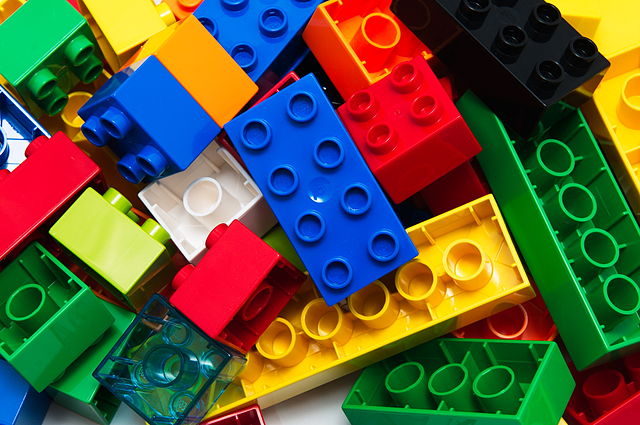
Image: 14-05-28-LEGO-by-RalfR-061.jpg, Ralf Roletschek, Wikimedia Commons, CC BY 3.0

A standard LEGO brick is a hollow rectangular block with cylindrical studs on the top face and a corresponding tube system on the underside that receives the studs of the brick below. The most common brick — the 2×4 — measures 31.8mm long, 15.8mm wide, and 11.4mm tall including studs. Stud diameter is 4.8mm. The LEGO name is moulded into the top of every stud on genuine bricks — this is the primary authenticity marker distinguishing genuine LEGO from compatible clone brands.
Bricks are produced in ABS plastic — acrylonitrile butadiene styrene — injection moulded to tolerances of 0.002mm. This precision is what allows bricks produced in 1958 to connect with bricks produced today. ABS gives LEGO its characteristic slight sheen, firm feel, and colour stability. Older bricks from the 1970s and 1980s show slight yellowing with age, particularly on white and light grey elements.
The LEGO system encompasses hundreds of element types beyond the standard brick — plates (one third the height of a standard brick), tiles (flat with no studs), slopes, arches, technic beams with pin holes, minifigure parts, and specialty elements for specific sets. Colours span the full spectrum — currently over 60 colours are in active production with additional retired colours sought by collectors.
Minifigures — the small yellow humanoid figures introduced in 1978 — are 4cm tall with a cylindrical head, articulated arms, and non-articulated legs. The LEGO name appears on the back torso of every genuine minifigure.
Recommended Products



Prices and availability are accurate as of the indicated date/time and are subject to change.
Any price and availability information displayed on Amazon at the time of purchase will apply.
1.3 What Does It Do?
LEGO bricks provide an open-ended construction system for building any structure, vehicle, or model imaginable from a standardised set of interlocking elements. Themed sets provide instructions for specific builds — vehicles, architecture, Star Wars ships, city buildings — while loose bricks support freeform creative construction without instruction.
Beyond play, LEGO is used in educational settings for teaching engineering principles, spatial reasoning, and collaborative problem solving. Sealed retired sets are held as investment assets. Competitive LEGO building and display — known as AFOL culture, Adult Fans of LEGO — supports a global community of collectors and builders.
1.4 How It Works
- The stud on the top of one brick aligns with the tube on the underside of the brick above.
- The stud diameter is slightly larger than the tube interior, creating a friction fit when pressed together — tight enough to hold securely under normal handling but loose enough to separate by hand.
- The hollow interior of each brick reduces material use and weight while the tube system provides the structural coupling point for bricks placed on top.
- Multiple bricks staggered across joints distribute load and create structural integrity in larger builds — the same principle used in brick masonry construction.
- Elements are separated using a brick separator tool or by finger pressure applied at the joint between two bricks.
Core mechanical principle: interference fit coupling — the slight size differential between stud and tube creates the holding force without adhesive or mechanical fasteners.
1.5 History & Evolution
Ole Kirk Christiansen founded the LEGO Group in Billund, Denmark in 1932, initially producing wooden toys. The company name derives from the Danish leg godt — meaning play well. Christiansen began producing plastic toys in 1947 following the acquisition of a plastic injection moulding machine. The first plastic LEGO brick was produced in 1949, based on a self-locking brick concept patented by British inventor Hilary Page.
The modern LEGO brick — with its stud-and-tube coupling system that provides clutch power from both above and below — was patented by Godtfred Kirk Christiansen, Ole’s son, in 1958. This patent is the foundation of the entire LEGO system. The patent expired in 1978, opening the market to compatible clone brands, but LEGO’s manufacturing precision and brand equity maintained its dominant position.
The minifigure was introduced in 1978 and transformed LEGO from a purely architectural construction toy into a character and narrative-driven play system. Licensed themes — beginning with Star Wars in 1999 — dramatically expanded the brand’s reach and adult collector base. Star Wars sets from the first wave of 1999 releases are now among the most valuable retired sets in the secondary market.
LEGO faced near-bankruptcy in 2003—2004 after overextension into theme parks, clothing, and video games. A restructuring under CEO Jørgen Vig Knudstorp returned the company to profitability by 2005. By 2015 LEGO had become the world’s largest toy company by revenue, surpassing Mattel and Hasbro.
1.6 Where You'll Usually Find One
- Toy retailers and LEGO brand stores for current production sets
- Thrift stores and charity shops — loose bricks donated in bulk constantly
- Estate sales and garage sales from households with children
- Online via eBay, BrickLink, and Facebook Marketplace for sets and loose elements
- BrickLink — the dedicated LEGO secondary market platform — for individual elements, retired sets, and minifigures
1.7 Common Misidentifications
Clone brand bricks: Mega Bloks, Cobi, Lepin, and dozens of other manufacturers produce LEGO-compatible bricks. Distinguished from genuine LEGO by the absence of the LEGO name on each stud, looser coupling tolerances, less consistent colour matching, and inferior ABS quality. Lepin — a Chinese manufacturer — produced near-identical copies of licensed LEGO sets before legal action forced closure.
Duplo: LEGO’s own larger-format brick line for toddlers. Duplo bricks are twice the dimensions of standard LEGO bricks in all directions, making them compatible with standard bricks on the stud interface but not interchangeable. The Duplo name appears on the studs rather than LEGO.
Technic: LEGO’s own engineering-focused line using beams, pins, axles, and gears rather than standard stud-and-tube bricks. Technic elements are genuine LEGO but form a distinct building system within the broader LEGO ecosystem.
1.8 Is It Valuable?
Loose unsorted LEGO bricks sell for $5—$10 per kilogram at thrift stores and garage sales. Value concentrates sharply in complete sets, retired themes, and sealed boxes.
- Common loose bricks: $5—$10 per kg
- Complete retired sets with instructions and all parts: 2—5x original retail value depending on theme and demand
- Sealed retired Star Wars sets from 1999—2007: $200—$3,000+
- Sealed Ultimate Collector Series sets: $500—$10,000+
- Rare promotional and employee-only sets: $1,000—$20,000+
- Individual rare minifigures in mint condition: $20—$500 depending on character and theme
Sealed condition is everything for investment-grade sets — an opened box drops value by 50—80% regardless of completeness. BrickLink and eBay sold listings provide the most accurate live pricing. Sets from discontinued licensed themes — particularly early Star Wars, Harry Potter, and Indiana Jones — command the strongest premiums.
1.9 Modern Alternatives
No competitor has displaced LEGO as the dominant premium construction toy. Compatible clone brands occupy the budget market but are not considered equivalent by collectors or dedicated builders. Digital building tools and video games including LEGO video game series and digital design software serve as creative complements rather than replacements. LEGO remains in full production with no signs of market decline — annual revenue has grown consistently for over a decade.
Looking for one? Where to buy LEGO →
1.10 Final Identification Checklist
- Rectangular ABS plastic bricks with cylindrical studs on top face
- LEGO name moulded into every stud — primary authenticity marker
- Tube system on underside receiving studs of brick below
- Standard 2×4 brick: 31.8mm x 15.8mm x 11.4mm including studs
- Slight sheen and firm feel consistent with high-grade ABS plastic
- Older white and grey bricks may show yellowing with age
- Minifigures 4cm tall with LEGO name on back torso
- Bricks from 1958 onward compatible with current production elements