Zippo Lighter
1.1 Quick Answer
A Zippo is a refillable metal windproof lighter manufactured by Zippo Manufacturing Company in Bradford, Pennsylvania since 1933. It uses a flint-and-wheel ignition system to ignite liquid naphtha fuel held in an internal cotton wadding reservoir. One of the most collected and recognised everyday carry objects in the world, Zippo lighters are produced in thousands of designs and carry a lifetime guarantee from the manufacturer.
1.2 Visual Identification Guide

Image: Zippo_Detail.jpg, Wikimedia Commons, CC BY-SA 3.0

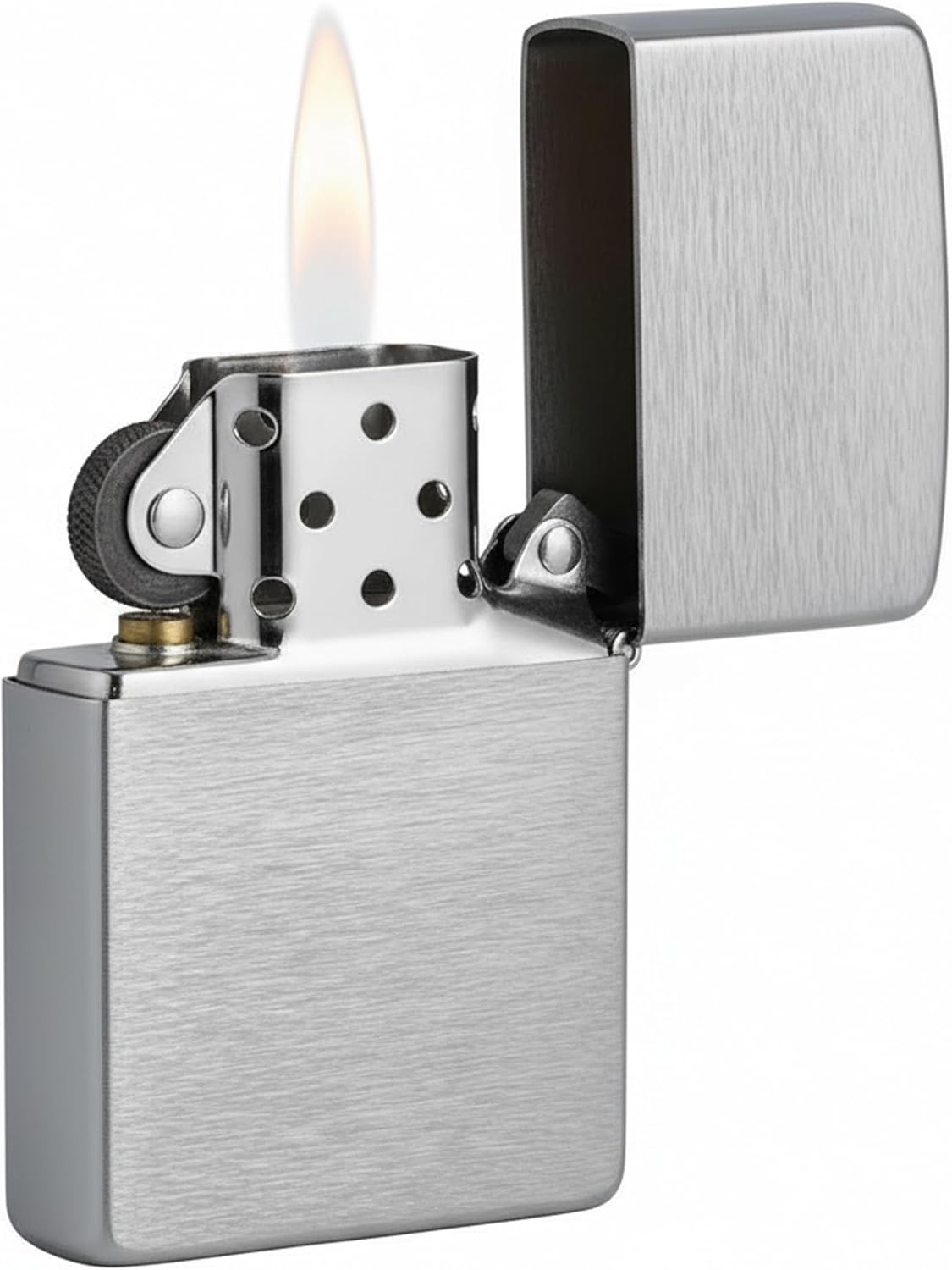
A standard Zippo lighter is a rectangular metal case measuring 2.25 inches tall, 1.5 inches wide, and 0.5 inches deep. Weight is approximately 2 ounces. The case is constructed from steel or brass in two pieces — a bottom insert housing the fuel reservoir and mechanism, and an outer case shell that slides over it. A hinged lid connects to the top of the outer case on a fixed pin hinge running the full width of the lighter.
The lid opens with a distinctive snap when flicked with the thumb. The hinge is visible as a continuous pin along the rear top edge. The chimney — a perforated metal shield surrounding the wick — sits inside the open lid and protects the flame from wind. The flint wheel protrudes slightly from the right side of the chimney housing and is the primary ignition point.
The base of the outer case carries the Zippo logo stamp and a date code — a system of letters and dots introduced in 1955 that precisely identifies the month and year of manufacture. This date code is the primary authentication and dating tool for collectors. The bottom insert is removable by sliding it out of the case and carries the fuel reservoir, cotton wadding, felt pad, flint spring, and wick assembly.
Finishes range from high-polish chrome and brushed chrome to brass, black matte, and painted enamel. Decorative variants include engraved designs, printed imagery, military unit markings, advertising, and limited edition artwork. Cases have been produced in sterling silver, gold plate, and titanium for premium lines.
Recommended Products


Prices and availability are accurate as of the indicated date/time and are subject to change.
Any price and availability information displayed on Amazon at the time of purchase will apply.
1.3 What Does It Do?
A Zippo lighter produces a sustained open flame for igniting cigarettes, cigars, candles, campfires, and any other material requiring a reliable ignition source. Its windproof design — the perforated chimney creating a sheltered combustion zone — allows the flame to remain lit in conditions that extinguish standard lighters. The refillable fuel reservoir and replaceable flint give it indefinite service life with basic maintenance.
Beyond its functional role, the Zippo serves as a personalised everyday carry object, a military memento, an advertising medium, and a collectible art object. The snap of the lid opening and closing is one of the most recognisable sounds in 20th century popular culture.
1.4 How It Works
- The lid is flicked open with the thumb, exposing the chimney and wick.
- The thumb rolls the serrated flint wheel downward against the spring-loaded flint rod inside the chimney housing.
- Friction between the wheel and flint generates sparks that ignite the naphtha-soaked wick protruding through the chimney base.
- The flame burns from the wick, sheltered by the perforated chimney walls which allow air in while blocking direct wind.
- Closing the lid extinguishes the flame by cutting off the oxygen supply to the wick.
- The cotton wadding inside the insert absorbs and holds liquid naphtha fuel, which is refilled through a felt pad on the base of the insert by removing it from the case.
Core mechanical principle: flint friction ignition and wick combustion — the same principle used in fire-starting tools for centuries, refined into a reliable, windproof, and refillable pocket format.
1.5 History & Evolution
George G. Blaisdell founded Zippo Manufacturing Company in Bradford, Pennsylvania in 1932. Inspired by an Austrian lighter he observed at a country club, Blaisdell redesigned the mechanism for ease of one-handed operation and introduced the first Zippo lighter in 1933. The name was reportedly chosen because Blaisdell liked the sound of the word zipper, which had recently been patented in the same region.
The lifetime guarantee — introduced from the beginning — became the foundation of Zippo’s brand identity. Any Zippo lighter, regardless of age or condition, is repaired free of charge by the factory. The company reports having repaired lighters over 90 years old.
World War II transformed Zippo into an iconic American object. Civilian production was suspended from 1942 to 1945 and all output directed to military supply. Soldiers carried, personalised, and traded Zippos across every theatre of the war. The association between Zippos and military service became permanent — Vietnam War-era lighters engraved with unit markings, dates, and personal inscriptions are among the most sought-after collectibles in the category.
Post-war production expanded into advertising and promotional lighters, which became a standard corporate gift through the 1950s and 1960s. Zippo has produced over 600 million lighters to date, all manufactured in Bradford, Pennsylvania. Production continues today with no change to the fundamental mechanism since 1933.
1.6 Where You'll Usually Find One
- Antique stores and vintage everyday carry dealers
- Estate sales and garage sales — among the most commonly found pocket items
- Thrift stores and charity shops in the miscellaneous or men’s accessories section
- Military surplus stores and militaria dealers for WWII and Vietnam-era examples
- Online via eBay — the largest secondary market for vintage and collectible Zippos
- New from tobacconists, gift retailers, and the Zippo official store
1.7 Common Misidentifications
Imitation or counterfeit Zippo: Numerous manufacturers produce Zippo-style windproof lighters. Distinguished from genuine Zippos by the absence of the Zippo name stamp on the base, lighter overall construction weight, loose hinge tolerance, and inferior flint wheel action. Genuine Zippos have a firm, precise hinge with minimal play.
Disposable lighter: Plastic-bodied single-use lighters share no physical characteristics with a Zippo beyond producing a flame. Immediately distinguished by their transparent plastic fuel reservoir, piezoelectric or flint ignition button, and non-refillable construction.
Torch lighter: A jet flame butane lighter in a metal case. May share a similar rectangular profile but is distinguished by a nozzle-style jet flame outlet, butane fuel rather than naphtha, and the absence of a wick and chimney assembly.
1.8 Is It Valuable?
Common post-1960s Zippos in used condition sell for $10—$30. Value rises significantly with age, condition, and markings.
- 1933—1940 pre-war Zippos in excellent condition: $200—$1,000+
- WWII steel case wartime Zippos (1942—1945) in good condition: $100—$400
- Vietnam War-era lighters with original engravings and unit markings: $150—$800+
- Advertising lighters from major brands in excellent condition: $20—$150
- Limited edition and commemorative sets in original packaging: $50—$300
- Errors, rare finishes, and factory prototype examples: $500—$5,000+ among serious collectors
The date code stamped on the base is the primary dating tool — a correctly dated lighter matching its claimed era is essential for value verification. The Zippo Collectors Club and dedicated online communities maintain detailed date code references and market pricing. Condition of the hinge, case finish, and legibility of any engraving are the key condition factors.
1.9 Modern Alternatives
Disposable butane lighters — led by the BIC lighter introduced in 1973 — replaced refillable lighters for everyday convenience use across the general population. Plasma arc electric lighters have emerged as a flameless alternative for wind-resistant ignition without fuel. Despite these developments Zippo remains in full production. Its collector market, lifetime guarantee, and cultural status ensure continued demand independent of its functional competition with cheaper disposable alternatives.
Looking for one? Where to buy a Zippo Lighter →
1.10 Final Identification Checklist
- Rectangular metal case 2.25 inches tall, 1.5 inches wide, 0.5 inches deep
- Hinged lid on a full-width pin hinge along the rear top edge
- Perforated metal chimney visible inside the open lid
- Serrated flint wheel on the right side of the chimney housing
- Zippo name and date code stamped on the base of the outer case
- Removable bottom insert housing fuel reservoir and wick assembly
- Distinctive snap when lid is opened or closed
- Chrome, brass, black matte, or decorative finish on outer case
- Made in Bradford, Pennsylvania USA