Protein Powder
1.1 Quick Answer
Protein powder is a concentrated dry protein supplement derived from whey, casein, soy, pea, egg, or rice, sold in tubs or pouches and mixed with water or milk to produce a high-protein shake. Used for post-workout muscle recovery, meal supplementation, and weight management, protein powder is the most widely consumed sports nutrition supplement globally. The market exceeds $20 billion annually, led by brands including Optimum Nutrition, MyProtein, Dymatize, and Bulk.
1.2 Visual Identification Guide
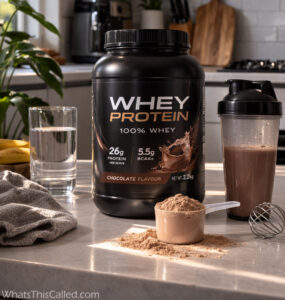 Protein powder is sold in plastic tubs of 500g to 5kg or resealable foil pouches. The tub — cylindrical or slightly tapered, 6 to 12 inches tall and 4 to 8 inches in diameter — has a screw-off or snap-off lid. A measuring scoop inside the tub is sized to deliver one serving, typically 25 to 35 grams of powder. Larger tubs include a scooper attached to the inner lid surface by a hook or clip.
The label design is bold and functional — front panel shows brand name, product name, protein source, flavour name, and a prominent protein grams per serving callout in large type. Common flavours are chocolate, vanilla, strawberry, chocolate peanut butter, and cookies and cream. Unflavoured variants carry a plain label. The nutrition panel on the rear lists total protein, BCAAs, carbohydrate, fat, sugar, and calories per serving and per 100g, alongside a full ingredients list and allergen information.
The powder itself varies by source. Whey concentrate and isolate are off-white to pale cream and have a slightly grainy texture. Pea protein is typically beige-green. Chocolate flavoured powders are mid-brown. The powder clumps slightly on exposure to moisture and has a distinctively sweet, synthetic, or dairy smell depending on flavour and protein source.
Recommended Products


Prices and availability are accurate as of the indicated date/time and are subject to change.
Any price and availability information displayed on Amazon at the time of purchase will apply.
1.3 What Does It Do?
Protein powder delivers a convenient, measured dose of high-quality protein — typically 20 to 30 grams per serving — to support muscle protein synthesis after resistance training, to meet daily protein targets for active individuals, and to add protein to a diet where whole food protein sources are insufficient or inconvenient. It is not a complete meal replacement in most formulations but supplements dietary protein intake efficiently.
1.4 How It Works
- Whey protein — the most common type — is derived from milk as a byproduct of cheese manufacture. Liquid whey is filtered, concentrated, and spray-dried into powder. Whey concentrate retains some fat and lactose; whey isolate undergoes additional filtration to remove most fat and lactose, producing a higher protein percentage per gram.
- Mixed with water or milk in a shaker bottle, the powder dissolves into a liquid shake for consumption.
- Digested in the stomach and small intestine, whey protein is broken down into amino acids and peptides and absorbed into the bloodstream.
- Whey is rapidly digested — peak amino acid levels in the blood occur within 60—90 minutes — making it well-suited for immediate post-workout consumption when muscle protein synthesis is elevated.
- Casein protein, by contrast, forms a gel in the stomach and digests slowly over 6—8 hours, providing sustained amino acid release suited to overnight recovery or between-meal supplementation.
1.5 History & Evolution
High-protein diets for strength and athletic performance predate modern supplements by millennia — ancient Greek Olympic athletes ate large quantities of meat as deliberate performance nutrition. The scientific understanding of protein as a distinct macronutrient developed through the 19th century following Gerardus Johannes Mulder’s 1838 identification of the compound he named protein from the Greek protos — first.
Early commercial protein supplements appeared in the 1950s bodybuilding culture. Irvin Johnson — later known as Rheo H. Blair — produced milk and egg protein supplements in Chicago from the early 1950s, selling them through his mail-order business and to bodybuilders including Steve Reeves. Bob Hoffman of York Barbell produced Hi-Proteen, widely used by American weightlifters from the 1950s through the 1970s.
Joe Weider, whose Weider brand shaped bodybuilding culture from the 1940s through the 1990s, commercialised protein supplements aggressively through his muscle magazines, connecting supplement advertising with aspirational physique imagery that established the marketing template the industry uses to this day. Optimum Nutrition, founded in 1986, introduced Gold Standard 100% Whey in 1990 — which became the best-selling protein powder of all time and remains the category benchmark.
The mainstream market for protein powder expanded dramatically from the 2000s as fitness culture moved beyond bodybuilding into general wellness. MyProtein, founded in the UK in 2004, pioneered direct-to-consumer online sales at significantly lower prices than retail, capturing a large share of the European market. Plant-based protein powders — pea, rice, and hemp — grew rapidly from the mid-2010s driven by vegan and lactose-intolerant consumers. The global protein supplement market now serves gym users, recreational athletes, older adults seeking muscle preservation, and general health consumers far beyond the original bodybuilding audience.
1.6 Where You'll Usually Find One
- Specialist sports nutrition retailers — GNC, Bodybuilding.com, Muscle Food
- Supermarkets and pharmacies for mainstream brands
- Online via brand direct sites and Amazon — the dominant purchase channel
- Gyms and health clubs selling single servings and small tubs
- Warehouse clubs (Costco) for large-format economy tubs
1.7 Common Misidentifications
Mass gainer: A high-calorie supplement powder containing protein alongside a large quantity of carbohydrates and calories — typically 500—1,200 calories per serving — designed for muscle bulk gain rather than lean protein supplementation. Distinguished by its much larger serving size, higher carbohydrate content on the nutrition label, and marketing focused on weight gain rather than lean muscle.
Meal replacement powder: A nutritionally complete powder containing protein, carbohydrates, fats, vitamins, and minerals in proportions designed to replace a full meal. Distinguished by its complete micronutrient profile and lower protein concentration per calorie relative to a pure protein supplement.
Pre-workout supplement: A powder containing caffeine, creatine, beta-alanine, and other performance compounds taken before training. Distinguished by its stimulant ingredients, lower protein content, and the tingling sensation caused by beta-alanine in most formulations.
1.8 Is It Valuable?
Protein powder is a consumed product with no collectible or secondhand value. Market value is assessed on cost per gram of protein.
- Budget own-brand whey concentrate 1kg: $20—$30
- Optimum Nutrition Gold Standard Whey 2.27kg: $60—$80
- MyProtein Impact Whey 2.5kg on sale: $35—$50
- Premium whey isolate 1kg: $40—$60
- Plant-based protein 1kg: $30—$50
- Cost per gram of protein: $0.03—$0.08 for most mainstream products
Third-party testing certification — Informed Sport, NSF Certified for Sport — is the primary quality differentiator for competitive athletes who face doping controls. Certified products are tested for banned substance contamination. Uncertified budget products carry low contamination risk for recreational users but are inappropriate for tested athletes.
1.9 Modern Alternatives
Whole food protein sources — chicken breast, eggs, Greek yoghurt, cottage cheese, legumes — are nutritionally superior to supplements and less processed. Protein bars provide a portable solid alternative. Liquid ready-to-drink protein shakes eliminate the mixing step. Creatine monohydrate serves a complementary but distinct function to protein in muscle performance. No supplement has displaced protein powder as the most cost-effective and convenient way to supplement dietary protein for active individuals, and the market continues to grow driven by expanding awareness of protein’s role in muscle preservation for older adults.
Looking for one? Where to buy Protein Powder →
1.10 Final Identification Checklist
- Plastic tub 500g to 5kg or resealable foil pouch
- Measuring scoop inside tub sized to one serving
- Bold label with protein source, flavour name, and grams of protein per serving
- Nutrition panel listing protein, BCAAs, carbohydrate, fat, and calories
- Powder texture: slightly grainy, off-white to cream on whey, beige-green on pea protein
- Sweet, dairy, or synthetic aroma from flavouring compounds
- Allergen information: milk, soy, egg, or gluten depending on protein source
- Third-party testing seal on certified products: Informed Sport or NSF